Key factors influencing the emerging world order
From Ganges to Volga: Forces shaping the new world order
- By Gurmehar --
- Sunday, 21 Dec, 2025
Russian President Vladimir Putin’s visit to India in December 2025 highlighted the growing importance of India-Russia relations in the global landscape. The visit came at a time when major shifts are taking place in geopolitics and the global economy. It reflected the future-oriented partnership between the two nations, which is likely to influence the emerging world order.
The international situation is changing rapidly. The US peace plan for Ukraine, coupled with growing tensions in regions like the South China Sea, South Asia, West Asia, Latin America, and the South Caucasus, signals a shift in global power. De-dollarisation trends and rising competition in technology also indicate that new powers are emerging, while traditional Western dominance faces challenges.
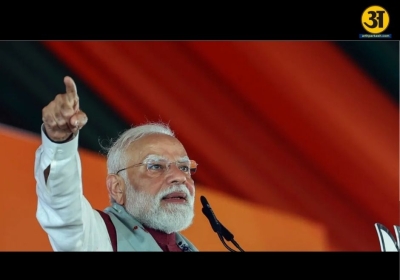
During his visit, Putin met Prime Minister Narendra Modi, who personally welcomed him on the tarmac. This gesture sent a clear message: India will not yield to Western pressure. Since the Ukraine conflict began in 2022, Western nations have urged India to take sides against Russia. However, Modi has consistently maintained that India will act in its own national interest, treating the Ukraine war as primarily a European conflict rather than a global one.
India’s approach is guided by strategic autonomy. The country has continued to import discounted Russian crude oil, even after facing pressure and tariffs from the US. Russia remains India’s largest defence supplier and a trusted partner, particularly when Western policies are unpredictable. The visit also reinforced India’s commitment to maintain an independent foreign policy while balancing global relationships.
Key agreements and strategic outcomes
Putin’s visit resulted in 16 agreements covering areas such as defence, trade, economy, healthcare, academia, culture, and media. Both leaders reaffirmed their commitment to a “balanced, mutually beneficial, and long-term partnership.” They emphasized cooperation in nuclear, space, science and technology, defence, and cultural exchanges. Modi and Putin also agreed on the importance of fighting terrorism, with India stressing that global unity is essential to counter threats.
In trade, the two countries set a goal to increase bilateral commerce to USD 100 billion by 2030 and agreed to speed up a free trade agreement with the Eurasian Economic Union. This will give India greater access to Eurasian markets and reduce economic vulnerability caused by Western sanctions and tariffs. The countries also discussed bilateral settlements in national currencies, interoperability of payment systems, and use of central bank digital currencies. Agreements on skilled worker mobility, 30-day free visas, and investment in Russia’s Far East and Arctic zones were also signed.
In defence, India and Russia are focusing on joint research, co-development, and co-production of advanced military technology. This partnership aims to support India’s self-reliance in defence while strengthening long-term strategic ties. Energy collaboration was expanded to include oil, gas, petrochemicals, nuclear energy, and underground coal gasification technologies, along with long-term supply of fertilisers and resolution of investor concerns.
Transport and connectivity projects, such as the International North-South Transport Corridor (INSTC), the Chennai–Vladivostok maritime route, and the Northern Sea Route, were also highlighted. In space and civilian nuclear fields, India and Russia agreed to cooperate on nuclear power plants, fuel cycle support, human spaceflight, satellite navigation, and joint ISRO-Roscosmos missions.
ALSO READ: PM-kisan 22nd instalment complete these mandatory steps to avail benefits
ALSO READ: Extra kilos, not years, could be the real reason your knees hurt
The long-term trajectory of India-Russia relations points to their growing role in shaping a multipolar world order. Russia, having faced economic and military pressure from the West over the Ukraine conflict, has gained confidence and clarity in its global strategy. Influenced by thinkers like Dr. Alexander Dugin, Russia envisions a world where power is distributed among multiple nations, including China, India, Brazil, and South Africa.
India is seen as a strong civilisational, economic, and military pillar in this emerging world order. Despite domestic challenges in infrastructure, governance, and technology, India remains resilient and powerful. Modi’s leadership, which prioritizes strategic autonomy and balanced diplomacy, has strengthened Russia’s confidence in India as a steadfast partner.
Conclusion: India must rise globally
The India-Russia partnership reflects a broader shift in global power. India’s careful diplomacy, combined with growing economic and military capabilities, positions it as a key player in the emerging multipolar world. However, to become a true global leader, India must combine diplomatic influence with economic strength and military readiness.
As nations like Russia, China, and the US continue to assert their positions, India has an opportunity to leverage its strengths and historical influence. By acting decisively in national interest, expanding strategic partnerships, and building domestic capabilities, India can punch above its weight and play a central role in shaping the future global order.
In conclusion, Putin’s visit is more than a bilateral event—it is a reminder that India must continue to pursue strategic autonomy, deepen key partnerships, and prepare to lead in a rapidly changing world. India’s role in the new world order will depend not only on diplomacy but also on the country’s ability to strengthen its economy, defence, and technological base, ensuring it stands as a respected global power in the decades to come.
Related News